
Choosing the Right Charging Method for Industrial Batteries
Updated: Jul 14
Choosing the right charging method for an industrial battery is not only about speed. This choice depends first on your operation profile, the number of work shifts, the time available for charging, and your electrical infrastructure.
This guide helps you understand when conventional charging remains relevant, when opportunity charging becomes an advantage, and in which situations fast charging may be considered.
Understanding Your Operation Profile
Before choosing a charging method, you need to analyze how your forklifts are used. Here are the main criteria to consider:
Number of shifts: do you work on one, two, or three shifts?
Time available for charging: do you have regular breaks or only short charging windows?
Level of use: are your forklifts used in a standard or intensive way?
Electrical infrastructure: can your installation support opportunity charging or fast charging?
Available maintenance: do you have a team or process dedicated to battery monitoring?
These elements directly influence the charging method to consider. Two fleets with the same number of work shifts may require different strategies depending on charging habits, infrastructure, and level of use.
The Main Charging Methods for Forklift Batteries
When to Choose Conventional Charging
(1 shift of 8 hours)
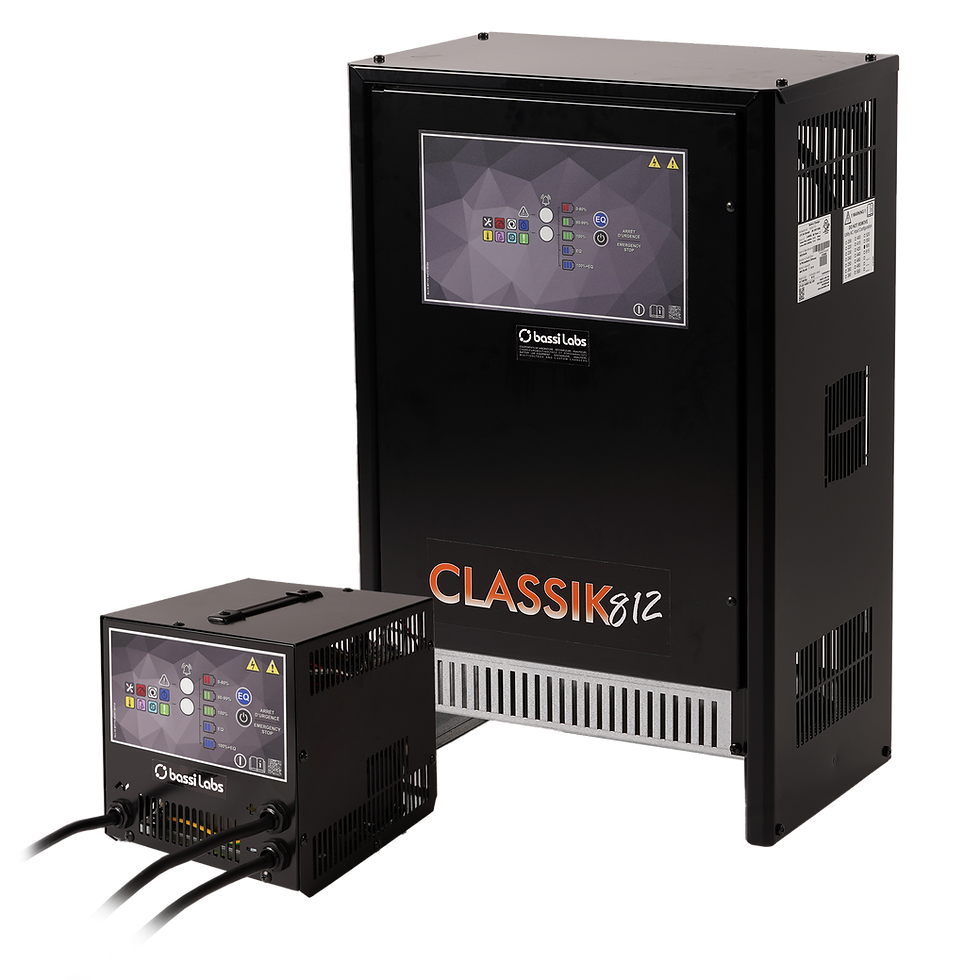
Conventional charging is the most traditional charging method for industrial batteries. It consists of fully charging the battery for a set period of time, usually overnight.
This method can be well suited when the operation is predictable, the forklift is used on a single work shift, and there is enough time to complete a full charge before the next use.
Conventional charging is still very common for lead-acid batteries. It is especially suitable for operations where batteries are used on a regular cycle: use during the work shift, then full recharge when the equipment is no longer required.
When to Choose Opportunity Charging
(Maximum 2 shifts of 8 hours)

Opportunity charging consists of charging the battery whenever time is available, for example during breaks, meals, or shift changes.
This method can be beneficial for fleets with a high utilization rate, especially when forklifts must remain available over more than one work shift. It allows energy to be added during the day, without waiting for a full charge at the end of the shift.
Opportunity charging can reduce the need for additional batteries, depending on the usage profile, available break periods, and charger capacity. However, it must be properly managed. It is important to monitor battery temperature and make sure the battery is adapted to this type of charging in order to avoid overheating or premature wear.
When to Choose Fast Charging
(3 work shifts)

Fast charging consists of providing a higher charging current in order to reduce battery downtime. It is generally considered when charging windows are very limited and forklifts must remain available over several work shifts.
This method can help increase productivity by reducing downtime, especially in intensive operations. However, it must be used with caution. A poorly adapted fast charge can generate more heat and accelerate battery degradation if it is not done correctly.
It is therefore essential to follow the manufacturer’s guidelines and validate that the battery, charger, and electrical infrastructure are compatible with this charging method.
The Charger at the Center of Performance
The charging method does not depend only on the battery. The charger plays a central role in the performance, lifespan, and availability of your forklifts.
The charger must be adapted to the type of battery, the desired charging capacity, the time available for charging, and the electrical infrastructure of your building. A poorly adapted charging method can extend downtime, increase heat generation, or reduce battery performance.
Before changing your charging method, it is important to check whether your current chargers are compatible with your real needs. In some cases, the issue is not only the battery, but also charging habits, charger output current, or available infrastructure.
Overview Table
Usage Profile | Charging Method to Evaluate* |
1 work shift with overnight charging | Conventional charging |
Up to 2 shifts with regular breaks | Opportunity charging |
Several shifts with limited charging windows | Fast charging |
Variable use or uncertain infrastructure | Case-by-case analysis |
*Indicative only. The final recommendation depends on your real operating conditions.
Better Evaluate Your Charging Strategy
How many work shifts must your batteries cover each day?
When are your batteries available for charging?
Are your batteries used under regular demand or in an intensive way?
Do your breaks allow enough charging time during the day?
Are your current chargers compatible with the charging method being considered?
Can your electrical infrastructure support opportunity charging or fast charging?
Answering these questions helps identify the right direction and the information needed for an analysis adapted to your reality.
The best charging method is not only the fastest one. It is the one that fits your use, your charging habits, and your electrical infrastructure.
Trying to decide between conventional charging, opportunity charging, or fast charging? Battelec can review your situation and recommend the most efficient charging strategy for your forklift fleet.
Articles to Read Next
This guide gives you the basics to better understand charging methods for industrial batteries. The right choice can help improve productivity, reduce downtime, and extend the lifespan of your equipment.