
Battery or Charger: How to Know Where the Problem Comes From
When a forklift loses autonomy, the first reaction is often to think that the battery is reaching the end of its life. However, the issue does not always come from the battery itself.
In many cases, the cause may be related to the charger, charging habits, maintenance, electrical infrastructure, or an operation that has become more intensive.
This guide helps you recognize the signs to check before replacing a battery.
The Battery No Longer Lasts Through the Work Shift
If a battery no longer allows the forklift to complete its work shift, several causes are possible.
The battery may be aging, poorly maintained, or no longer adapted to the application. But the issue can also come from incomplete charging, a poorly adapted charger, or a change in work cycles.
For example, a forklift that was previously used on one shift may now be used for longer periods, with less time available for charging. In that case, the battery is not necessarily defective. It may simply no longer match your operation profile.
Charging Takes Longer Than Before

A longer charging time can indicate a battery issue, but also a charger issue.
You need to check whether the charger still matches the voltage and capacity of the battery. An aging, poorly configured, or poorly adapted charger can extend charging time and reduce forklift availability.
Before replacing the battery, it is important to validate whether the charger is working properly and whether it is still adapted to your real use.
The Battery Heats During Charging
A battery that heats abnormally during charging should be monitored. Heat can be related to a battery in poor condition, but also to a poorly adapted charging current, an inadequate charging method, or infrastructure that does not match the needs of the operation.
For lead-acid batteries, Battelec can help evaluate whether the charging method, maintenance, and charger are adapted to the application.
For lithium batteries, Velox can help validate whether the battery, charger, and charging configurations match the requirements of the operation.
The Water Level Drops Quickly
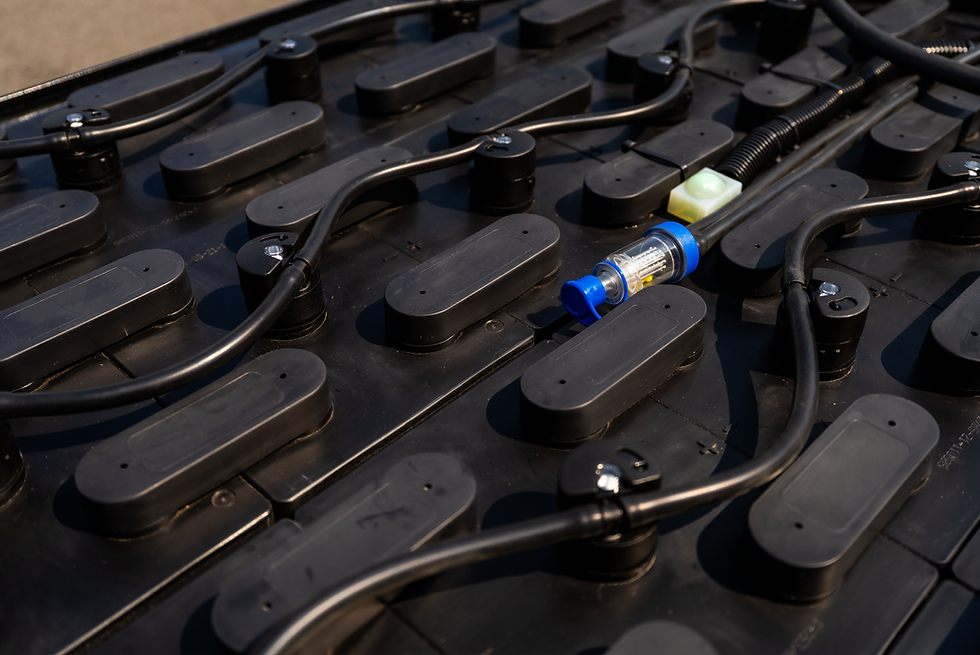
For a lead-acid battery, a quick drop in water level can indicate a maintenance, charging, or usage issue.
Improper watering, overcharging, excessive heat, or a poor maintenance routine can reduce battery lifespan. In this type of situation, you should not only add water more often. You need to understand why the level is dropping so quickly.
The Charger Shows Errors
A charger that shows errors, stops too early, or seems irregular should be checked. These signs may indicate a connection issue, battery issue, configuration issue, or charger issue.
It is also important to check the cables, connectors, and general condition of the installation. A poor connection can create interruptions, slow charging, or affect the diagnosis.
In some cases, the charger already provides useful information. It simply needs to be interpreted correctly.
The Operation Has Changed
Even if the battery and charger worked well before, a change in the operation can create new problems.
This can happen if:
the forklift is used longer each day
a second shift has been added
breaks are shorter
loads are heavier
an attachment has been added to the forklift
the work environment is more demanding
In these situations, the complete energy system should be reviewed: battery, charger, charging method, and electrical infrastructure.
Before Replacing the Battery
Before concluding that the battery must be replaced, it is useful to check:
the age and general condition of the battery
the type of battery: lead-acid or lithium
voltage and capacity
the charger being used
the charging method
charging habits
motor hours
the condition of cables and connectors
available electrical infrastructure
This review helps avoid replacing a battery when the issue comes instead from the charger or the real use.
The Right Approach
A loss of performance does not always mean that the battery must be changed. The issue can come from several elements working together.
The right approach is to review the battery, charger, charging habits, and operation profile.
For a lead-acid application, Battelec can help you check your battery, charger, and maintenance method.
For a lithium application, Velox can review your battery, charger, and infrastructure to recommend an adapted solution.